Search This Blog

Friday, February 6, 2015

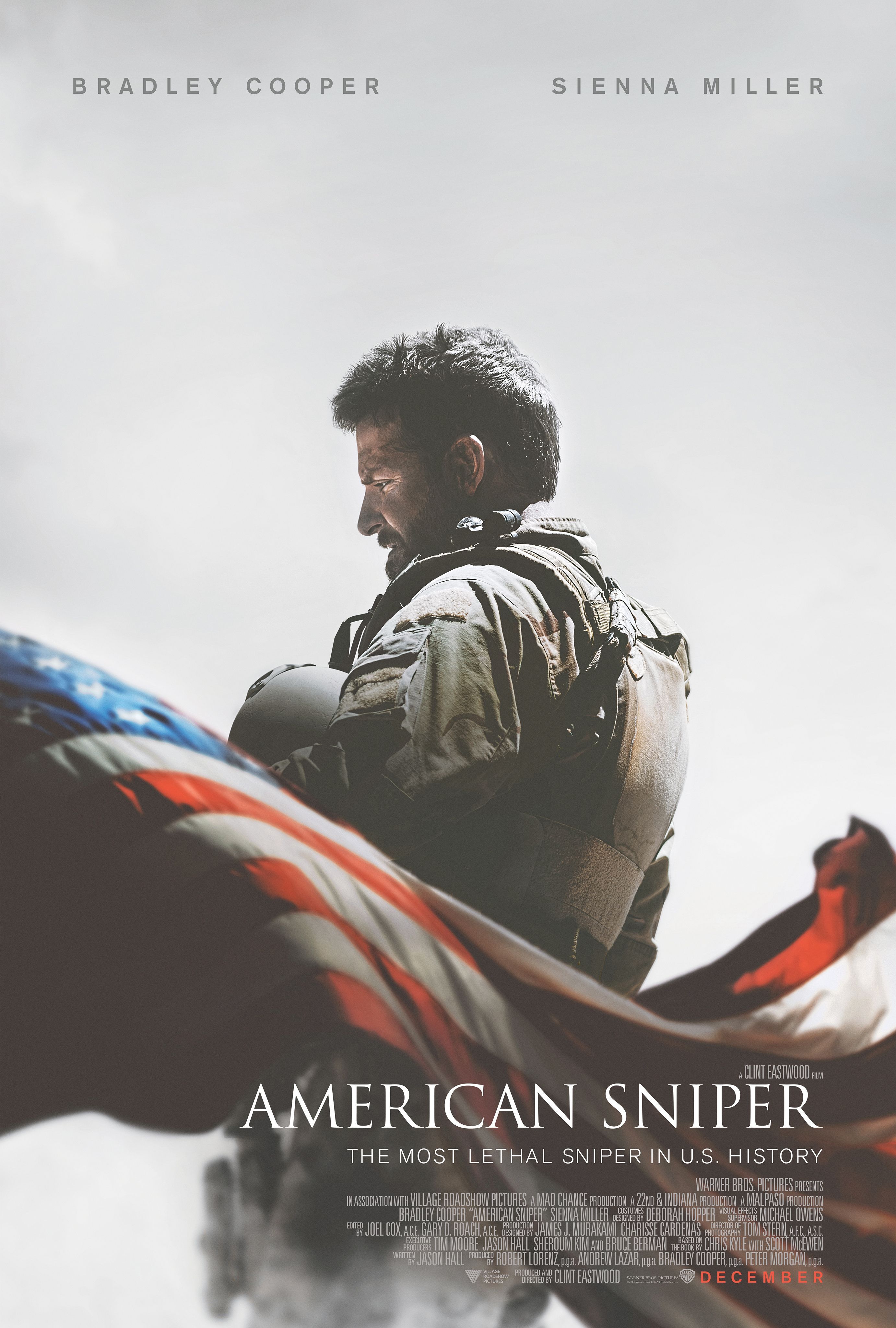
AMERICAN SNIPER

The following review attempts to leave out any bias for Chris Kyle, the US Military, the Left, the Right, and focus purely on the cinematic aspects of this film. You can read my personal thoughts on the controversy surrounding the film here. 

The controversy surrounding American Sniper made me extremely curious to check out Clint Eastwood’s latest film. The 84-year-old director scored the biggest box office opening of his directorial career telling the story of Navy SEAL Chris Kyle, the deadliest sniper in American Military history with 160 confirmed kills. He was tragically killed at a gun range helping a fellow veteran suffering from post-traumatic stress disorder. The film is based on his book of the same name.

Alfred Hitchcock once said that if you wanted to create suspense, an imperfect way to do so would be to have men sitting around a table and then suddenly, the blast of a bomb having been hidden beneath the table goes off. Instead, one must first see the bomb, then have the men enter the room, proceed to talk for a while, then have the explosion.

Eastwood employs the latter method in the opening of his film, showing us the moral dilemma of Chris Kyle’s first potential kill he is viewing from a perch above the action below: a child being handed a grenade to use against oncoming American troops. The film never goes any further than what is mentioned above to create true tension between Kyle and a man known as Mustafa (played by Sammy Sheik), the Iraqi equivalent of the titular American Sniper.  He is a silent killing machine that exists in the context of the film only to play spin the bullet (I’m not kidding) and conveniently kill characters necessary for the plot to move forward. 


Mustafa is a prime example of the two dimensionality of the film’s Middle Eastern protagonists. At this point in the film, I questioned whether this was done on purpose. I will never know what it's like to experience combat from the perspective of a Navy SEAL, but for those guys, it was probably a kill or be killed mentality that returned many to their families. It's rumored that when Steven Spielberg was attached to direct the project, he wanted to explore the psychological aspects of both the Chris Kyle and Mustafa, but this was unable to come to fruition due to time and budget constraints.

Sienna Miller delivers a great performance as Taya, Kyle’s wife, with the amount of material she is given to deal with. The only memorable moments in her performance are questioning why the father of her children chooses to go off to Iraq and fight an enemy thousands of miles away instead of building a relationship with his newborn children. All attention is focused on Kyle himself; after all it is his film. I found myself getting my hopes up for a psychological exploration behind the moral questions raised by killing people for his country. 


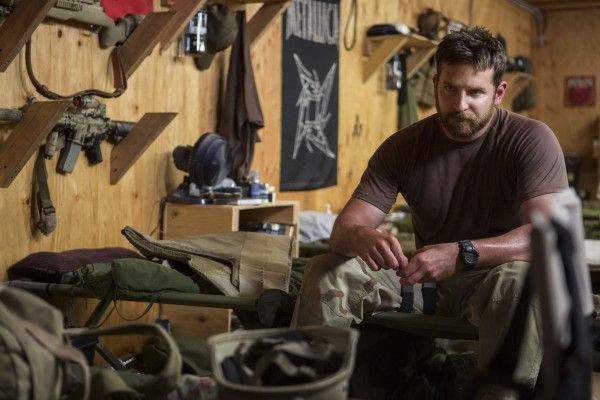
Instead, a great performance from Bradley Cooper attempted to compensate for very bland characters. There is no question about Cooper owning this film from start to finish. For those who know what the true life Chris Kyle looked and sounded like (the man appeared on a few talk shows to promote his book when it was released in 2012), it’s a no brainer why the Academy gave him his 3rd consecutive Oscar nomination for this performance. His voice is pitched differently, the characterized Texan accent is pretty darn good, and his usual trim physique is hidden beneath 225 pounds of bulk Cooper put on for the role.

One of the most striking scenes comes as a sandstorm looms on the horizon and Chris Kyle finally reaches the breaking point of servitude. Eastwood manages to cleverly sneak in a nod to the flashback within the opening of the film as he leaves behind one life for another. An impending storm means impending doom, not only because Kyle and his team are surrounded by hostile enemies, but because it is in this inescapable fate that he realizes that he didn't have to put himself through this. It is the closest we get to a look into the man's psyche, something I was dying to see instead of an Iraqi fighting against, then helping, then turning back against US soldiers. 

Instead of showing us a potentially heart breaking battle to return to normalcy once back in the US, writer Jason Hall writes off Kyle’s PTSD as a passing thought late in the third act. Again, I'm not kidding. Eastwood’s film strives for greatness, but never truly achieves or clearly gets across its Pro-Veteran, anti-war statement due to its flimsy script.

 6/10


Sunday, February 1, 2015

My Thoughts on AMERICAN SNIPER

This is not a review of Clint Eastwood's latest film, American Sniper, but instead my thoughts on the controversy ensuing as a result of people viewing the film. 

Early on in American Sniper, Chris Kyle (played by Bradley Cooper in an amazing performance) walks in on one of his fellow soldiers, Biggles (Jake McDorman), reading a Punisher comic book and talks about Kyle's first two kills as a sniper: a young boy and his mother attempting to throw a grenade at an oncoming convoy of soldiers. The two men discuss the evils amongst them are unlike anything they've seen. Evil. That word that comes up a few times in this film. Many have taken to twitter calling Muslims evil or expressing hatred towards them as a result of American Sniper.

I do not believe Mr. Eastwood's film makes out the people of the Muslim faith to be evil and anyone having that impression certainly misinterpreted what they saw on screen. The true tragedy of the war and of Kyle's four tours of duty was the onset of post-traumatic stress disorder. One scene finds him sitting at home reading a magazine and is alarmed at the sound of a lawn mower somewhere on his street starting up. At an auto shop, an auto technician's equipment causes him to flinch. Combat in the Middle East caused Kyle to be lost for a number of years, not truly returning to a stable state of mind until after he began to work with other Veterans suffering from PTSD.


Eastwood did not give us a film about heroism, patriotism, or defending our country. American Sniper is about a war that makes no sense and the media motivating blind anger that drives a man to continue serving in the military until in the face of impending death, decides he's had enough. Ironically, Chris Kyle was killed not on the battlefield or by enemy fire, but by a fellow Veteran at a shooting range. Why he would take someone with severe post-traumatic stress to a shooting range is beyond me, but the man lost his life trying to help others in his situation.

The opening of the film shows us a good ol' boy interested in serving in the military, picking the Navy Seals after seeing coverage of the 1998 U.S. Embassy bombings. Again, the media pushes him to take his hatred out through serving in the military. Later in the movie, images of 9/11 precede his return to action. The war in Iraq has absolutely nothing to do with the terrorist attacks on New York City in 2001, so this leads me to believe that Kyle's misplaced anger was purposefully done to show how misleading what we see on television can be. At least I hope so. Clint Eastwood is not a stupid man and has been challenging himself and his audiences the last few years with some great directorial material.


Another element that I initially took issues with was that the film is very black and white in terms of the portrayal of the enemy. Again, another creative decision? I can't imagine what experiencing combat is like, but in the film, the enemies and very black and white. There is good, there is bad. Not too much in between. To those who have been those situations, I have been told that it is kill or be killed. I really really want to believe that Clint Eastwood took this into consideration when portraying the enemy combatants as one sided. My greatest critical issue with the film comes at this point. A friend of mine has said that when Steven Spielberg was initially attached to direct, he was met with resistance from the producers when he wanted to alter the story to include segments showing Mustafa's humanity and home life.

Is American Sniper propaganda? I personally think the film's right wing elements are packed on thick (Eastwood is a republican), causing the right to think the film is pro-war. But how can it be pro-war when Chris Kyle repeatedly picks serving in the military over his wife? Terrorism destroyed lives on both the USA and Iraqi fronts, but to say that this film disregards one over the other is preposterous. If American Sniper tells us anything it is that PTSD took Chris Kyle from his family for years, mentally, for years, blinded his thinking, and then ultimately, another Vet suffering far more severely than he did killed him.

I am not criticizing Chris Kyle, his beliefs, or his family, but the twisted notions having been taken on by the public about Clint Eastwood's film. If anything, it tells us that a man in an already very specific good ol' boy Christianized upbringing let's what he sees on TV influence him. If you would like to discuss my thoughts on Kyle, his untimely death, his portrayal on film, get in touch with me on Twitter, Facebook, or any other means on social media (@eduardovictory).


Wednesday, December 31, 2014

Top 10 Films of 2014

If you are one of those people who believe that modern cinema has lost its originality, you should stop reading this right now. For the first time in my life, I saw more new release films than ever before and I tried to watch as much as I possibly could. Even this year’s comic book adaptations seemed to be new hybrid films infusing new elements not attempted before within their genres. This is a ranking of the films that I liked best, not necessarily the highest rated, so you will find that some films that are rated higher than others will appear lower on the list.


10. The LEGO Movie


From its trailers, Chris Miller and Phil Lord looked like they were about to drop a grade A bomb on the world in an explosion of animated LEGO bricks, voices of top list actors, and characters from all over the world of pop culture (Batman? BATMAN!?). Instead, they delivered what is probably the biggest surprise of the year. Their story is a modernized take on Orwellian society a la “1984” and makes great usage out of the vocal talents of the cast. Liam Neeson’s happy voice to this day makes me laugh uncontrollably. 7/10

9. Nymphomaniac


Lars Von Trier certainly has a lot to say about love, loss, and sex. Joe, a woman who is driven to the lowest lows in life due to her addiction to having sex, recounts her story to Seligman, played by a very subdued Stellan Skarsgård.  I decided to include the film’s both halves as one as they really are one film, divided into two parts due to length. The film is really brought down in its second half, but its opening two hours are a powerful exploration at the destruction that sex (without love) can have on one’s personal life. I really do believe that Von Trier hates women and this film certainly hammered this point into my mind. 7/10

8. Captain America: The Winter Soldier


 Marvel Studios is in the business of pleasing its fans (and it’s financial backers), not caring what critics have to say. This is a great move for a major studio but unfortunately has produced some pretty lack luster stuff since the studio got off the ground in 2008. With The Winter Soldier, Marvel not only brought Captain America into the present day, but also created their best work to date. Directors Joe and Anthony Russo create a film with action so intense, it rivals anything done in The Avengers (and in my opinion is far better). Chris Evans channels the internal conflict of a man with the morals of yesteryear trapped in a time in which no one cares for them anymore. Does preventing a crime before it even happens justify trampling on people’s freedoms? Marvel delivers a sharp political thriller for modern audiences. 8/10

 7. Nightcrawler


 Dan Gilroy proves himself a force to be reckoned with as he proved himself with this, his first film! Jake Gyllenhaal delivers a flat out disturbing performance as Lou Bloom, a small time thief with a big business approach to his newfound career. Nightcrawling finds him and his partner Rick (Riz Ahmed delivers a great performance) glued to a police scanner, waiting for grizzly accidents and murders that the two can photograph. Lou is willing to go farther, drive faster, and push people harder than most – but how far will he go to be the best? The final 20 minutes culminates in a pulse pounding car chase that rivals anything done by Marvel or any action movie of recent memory. 7/10

6. Dawn of the Planet of the Apes


It blows my mind that the Planet of the Apes franchise still has steam in it 46 years after the first film. Director Matt Reeves steps in as director, taking over from Rise of the Planet of the Apes director Rupert Wyatt. Reeves took out the references and Easter eggs from the past films and crafted a smart and beautiful story about Caesar and his colony of apes living in the wilderness around San Francisco. Jason Clarke brings earnestness to his role as Malcom, a man who wishes that both groups could work together. In a role that gives J.K. Simmons’ a run for his money as villain of the year, Caesar’s ally Koba turns on him. I can’t remember the last time I saw film in which I sympathized so deeply with a villain. The way I saw it, this movie doesn’t have a villain. Caesar is our main character, so we side with him naturally, but Koba is pretty damn convincing. 8/10

 5. Under the Skin


Scarlett Johansson plays a femme fatale in this picture, luring horny men to their deaths. The film features what are easily the most bizarre sequences of any of the films I’ve ranked on this list and is definitely the heaviest this side of the top spot. The backdrop of Scotland proves to be an aesthetically beautiful decision as director Jonathan Glazer films primarily on location, outdoors. When the film enters its second half Johansson’s Female character begins to go on a journey of self-discovery, we are forced to rely entirely on her subtly beautiful performance. But why she goes on this journey and pretty much every other aspect of the plot is open for interpretation, something that no other film I’ve this year has achieved. Scarlett is one of my favorite actresses and this role really gets to show off her acting skill and prowess. 8/10

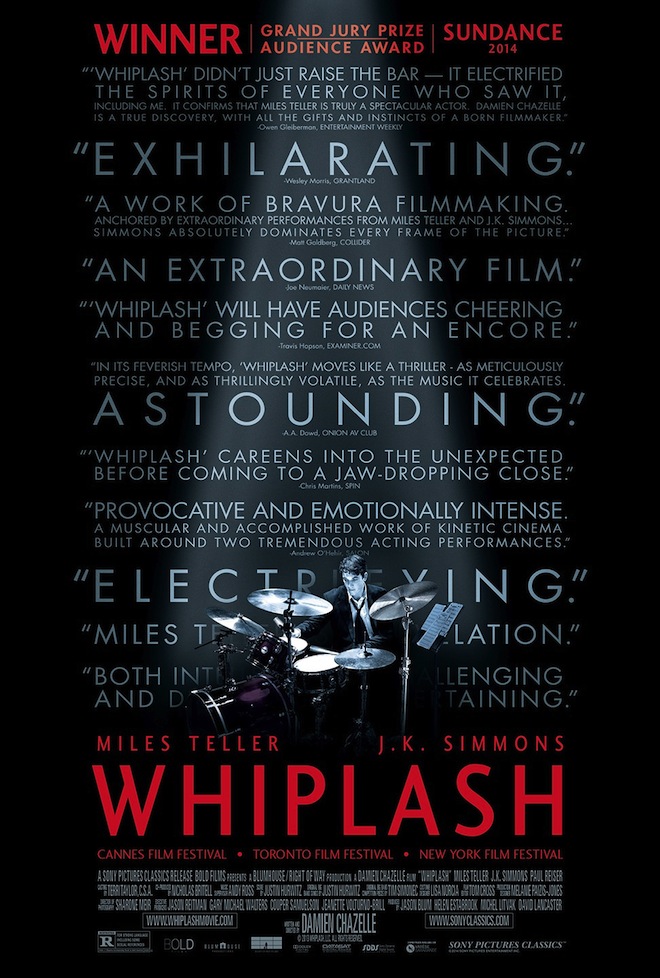
4. Whiplash


How far are you willing to go to get what you want? Andrew wants to be one of the great jazz drummers, even if it means great harm or self-injury. Scenes of bloody blisters, and people who want the same thing you do. J.K. Simmons steals the show as Terence Fletcher, the music professor from hell who insults, slaps, and tortures his students to push them to be the best musicians possible. The heart of the entire film though lies with Miles Teller’s performance as Andrew. His face is so beautifully expressive that we can feel everything he does. At times, no dialogue is needed to get the audience to a certain feeling. I am a musician myself and found the film to be the best and worst of an academic experience studying music. 8/10

3. The Babadook


 As a horror fan, I will be the first to say that modern, big studio horror films suck. They flat out suck. It pains me to think that studios like Fox, Universal, and MGM were producing the best horror films ever made have been reduced to remakes. The Babadook proves that there is still hope in the world of cinematic terror and holy crap is it frightening. The film doesn’t rely on a single jump scare to frighten its audience and instead chooses to toy with them psychologically, just as it does with its protagonists. Beyond that terror, the film is about living with a memory that can haunt us every single day of our lives. Jennifer Kent’s film is dark, expressionist, and at times downright weird. It blurs the line between reality and fantasy to create not only one of the best films of the year, but one of the best horror films ever made.  9/10

2. Birdman


Alejandro Gonzalez Iñarritu takes us behind the scenes of the most important dramatic production of Riggin Thompson’s life. A man who is typecast as the superhero he played in a film decades ago attempts to prove he is not a washed up hack living in the past, but an actor who cares deeply about his craft. Where Tim Burton’s Big Eyes failed in its commentary about art criticism, Birdman succeeds. What does it mean to be dedicated to your craft and (just as it is explored in Whiplash) how far are you willing to go to prove your dedication? Edward Norton’s character Mike supplies many laughs as Norton is essentially playing a dramatized version of himself (a dedicated character actor). Not only does Birdman give us the best performance of Michael Keaton’s career but is also the funniest movie to play in cinemas this year. Iñarritu creates an eccentric take on what it really means to be an actor. 9/10

1. Interstellar/Wetlands


Don’t make me pick. Please don’t make me pick which of these two was my favorite film of the year. I couldn’t decide which, so I picked both. Interstellar is Christopher Nolan’s biggest and most heartfelt film to date. An enormous spectacle to behold, the film explores a new galaxy in which to save mankind from a dying Earth. Thrilling action sequences in this movie really are an essential part of the story. The film does not stop to have a chase sequence; every set piece is necessary to move the story forward. The scenes involving a wormhole, a black hole named Gargantua, and anything scored by Hans Zimmer’s use of a pipe organ created an experience unlike any other this year. Deep into the film’s third act, there is a docking sequence so intense, my heart raced all 4 times I saw it. The final 20 minutes of the film contains a scene so radical, it’s out there, it’s miraculous Paramount and Warner Brothers didn’t interfere in its production. The film is deeply philosophical, exploring the relationship between Cooper (Matthew McConaughey) and his daughter Murph (played by Mackenzie Foy and Jessica Chastain). 9/10


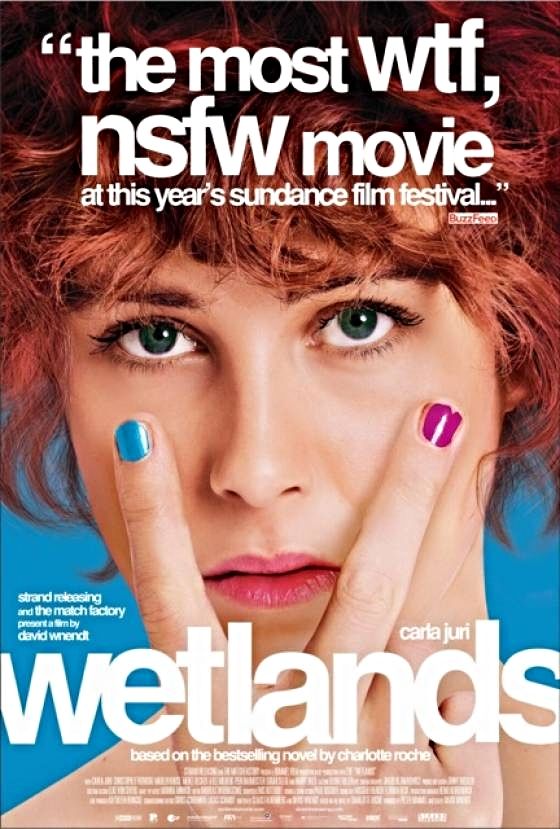
Wetlands came out of nowhere. Having drawn quite a bit of buzz on the festival circuit for its graphic content, the film lives up to the buzz. Carla Juri stole my heart and has yet to give it back. Her interpretation of Helen Memel is so punk that it makes me sad that I could never be anywhere on her level. As a matter of fact, the entire film is punk. It’s gritty, dirty, grimy, and never afraid to challenge a social taboo. Masturbation? No problem. Public toilets? There is a scene for you (and it will traumatize you). I really wish this film could have had a wider release for more people to experience. The friendship between Helen and her best friend Corinna (Marlen Kruse) is wonderful as the two young actresses bring a sincerity that can’t be faked. They are in the roles as deep as they could go and it shows. Helen longs for reconciliation between her separated parents and the way she attempts it (after a shaving accident involving hemorrhoids) will stay with you for a very long time. Go bold or go home, indeed. 8/10
Monday, December 22, 2014

The Best and Worst Posters of 2014

In an era of technology, movie posters designs have suffered along with the rest of the CGI enhanced and digitally altered landscape of modern cinema. Often times, it is a because of a poster that we decide whether to skip or see a film. It is one of the first impressions that must communicate mood, tone, star power, and why you should spend your hard earned $10 on a particular picture. The following list is not a critique of the films, nor their content. This is purely looking at various films of 2014 and their one sheets. As always, there are hits and misses, but I've chosen to list some honorable mentions and my favorite poster for the year.

Honorable Mentions

Particle Fever


This documentary dealing with particle physics, particle accelorators, and the "God Particle" itself gave us this minimalistic poster. Chalk circles against a backdrop of drawn stars conjure images of life's cyclical nature. Amazing.

Nightcrawler


After you see Dan Gilroy's debut film, you will never look at Gyllenhaal the same way again. This poster, prepares you for the pulp crime experience that the film drops its viewers into before even seeing a single frame of footage is seen. 

Misses

3 Days to Kill


Kevin Costner's character has a dark side. I got it. Unfortunately, I understood that a little too quickly. Besides the obvious black bar across the right side, what is up with that weird smirk on his face? What I took away from this poster is wanting to try wearing my French Cuff shirt sleeves up that high on my arms to see if it's even possible to clip them together with a cuff link in that way.

Any poster for Dracula Untold


"Hello, I'm not Batman - but I want to be."

Blended


Adam Sandler's film are essentially paid vacations - at least I'm convinced they must be at this point in his career. For this latest outing, not a single element looks real to me. If anyone needs any proof that an intern with photoshop knowledge throws these one sheets together in an afternoon in between bites of a burrito bowl from Chipotle, they don't need to look any farther than this poster. The three people in the background aren't even looking at Sandler, but past him. The lighting on each element doesn't match each other, the text elements are moronically simple, the animals in the background seem to be floating - I need to stop.


Favorites

Guardians of the Galaxy


Channeling the classic looks of posters like Raiders of the Lost Ark and The Empire Strikes Back, the artwork for Guardians harkens back to an era in which posters were hand painted. No one has their back to the camera, no debris falling all over the place, but most importantly, it sells the characters and cast.

Dawn of the Planet of the Apes


This one speaks for itself. "Apes together... Strong..." The latest chapter of the Planet of the Apes series lets audiences know that Caesar is front and center in this tale. It's amazing to think that this rendering of Andy Serkis' character is entirely CGI.

Top Picks

Under the Skin 


This poster for Jonathan Glazer's sexy tale of desire, lust, and humanity is every bit mysterious as the film. A minimalist approach that sells not only its star, but the sci-fi elements that make up the foundation of the plot. However, this is not your typical "star vehicle" for Scarlett Johansson to kick major ass in. Half of her face appears in shades of teal blue and red while the other side is completely obscured by stars. This is a level of minimalism that even Kubrick would be proud of. 

Any poster for Nymphomaniac Volume 1 and Volume 2


Lars Von Trier's 4 - 5 1/2 hour epic (depending on which version you saw) about sex, lack of love, and conversations with Stellan Skarsgard told us immediately that we were in for an experience unlike anything else we'd see this year, even in its marketing. The film had about a half dozen posters with the cast showing us their best "o-faces." 


What other posters did you like or dislike this year? Sound off on the comments below!

Monday, November 17, 2014

Review: INTERSTELLAR

By Eduardo Victoria


Christopher Nolan’s last film, the trilogy capper The Dark Knight Rises, had many problems in its third act. Having taken a screenwriting class, attended a few lectures, and listened in on a couple workshops; if a screenplay is to run in to any trouble during the length of its pages, it will more than likely happen in the third act. Everyone stumbles, even the almighty Nolans (Chris’ brother Jonathan wrote the script for Interstellar when Steven Spielberg was attached as director) have to at some point. It looks as if Rises’ troubles also slipped into the script for their latest film. Unfortunately, the entire plot of the film has suffered… Not to say that the experience wasn’t enjoyable. As a matter of fact, this film has to be my favorite movie I’ve seen all year, next to Captain America: The Winter Soldier. Nolan has given us a vision that forces its audience to think. Ironically, the flawed script has been brought to light because of such thought. Normally a film of this scope asks for nothing more from its audience than to suspend disbelief and enjoy the ride. For Christopher Nolan, simply enjoying the ride is not enough: he wants his audience to be a part of it.
           
 Matthew McConaughey plays Cooper, an engineer turned farmer who was once one of NASA’s best pilots. He grows what’s one of the last sustainable crops on Earth: corn. The remaining population of the Earth is frequently bombarded by massive dust storms that leave a layer of dust on everything. Cooper’s daughter Murph notices strange formations in dirt on the floor of her bedroom, a room she says is haunted by a poltergeist communicating with her by knocking books off of a shelf. Coop notices that there may be more to this than they think, decoding a set of coordinates written in binary code left in the dust on the floor. Following these coordinates, he comes face to face with a former colleague, Professor Brand (played by Chris Nolan’s lucky charm Michael Caine). There, Cooper learns that humanity’s days are numbered and this secret NASA installation is the final hope for humanity. Two possibilities exist, but both involve travel through a mysterious wormhole that popped into existence from nothing. The USS Endurance takes off into space to explore the possibilities of life that may lie on other planets. But on this journey, the crew, especially Cooper and Brand, discover the very things that make us human.


 Nolan’s direction brings us a blockbuster film on a scope not seen since probably the 1980’s. It was commonplace to see the biggest films of the year on the Best Picture roster along with the best drama titles there were to offer. Films like Star Wars, Jaws, Close Encounters of the Third Kind, Raiders of the Lost Ark, E.T., and The Fugitive all garnered Best Picture nods. The first few of the films in the above list were also very experimental adventure films in that something like them had never quite been done before. Interstellar harkens back to those days as the film greatly toys with the audience’s perception of dialogue through the overpowering of specific film elements such as the sound and music. Hans Zimmer’s score largely features a Harrison & Harrison 4 manual organ (meaning 4 rows of keys) that at times rumbled the seats in the theatre. I can’t remember the last time I literally felt a film score in addition to hearing it. Nolan really intended to challenge his audience from the start, as the chase through a cornfield’s dialogue is difficult to understand. Cool, but I wasn’t entirely sold on the film’s “experimental” nature just yet.

The film greatly stumbles in its plot unfortunately with a sloppy script from Jonathan Nolan, rewritten by director Christopher when he came on board after Steven Spielberg left the project. Nolan’s style involves that the viewer give most, if not all of their attention, because a key plot element could come from a rather small line of dialogue. This happens many times in Interstellar and frankly, got really tiresome by the time our characters had left Earth. Many plot holes abound in this film, the biggest one involving Jessica Chastain’s older Murph and Michael Cain’s character. A particularly interesting idea is presented by Anne Hathaway’s character about love, but isn’t explored enough after it is presented. Nolan leaves pieces of the puzzle behind to have the audience thinking and discussing after they’ve seen the film, but some stuff is downright not thought out at all.

What everyone will be talking about (besides the last 20 minutes of the film, which I will not write about to not spoil the film for those who have yet to see it) will be the incredibly breathtaking sequences regarding Gargantua: a massive blackhole that scientist and computer graphic artists spent hours rendering, frame by frame. It's imagery of this nature that makes the IMAX format essential and the premiere way to experience any movie of this scope. The ring of light around it seems to spin over the top and then redirected it's way down to the bottom simultaneously, twisting the perception of it in the way that the characters are disoriented by it. But for every victory, there is unfortunately a blunder. The cornfield chase early on in the film is meant to disorient the audience, just as if they were really driving through a cornfield. Again, Nolan wants us to be on the ride. But no matter what the almighty Nolan says, the truth of the matter is, I didn't fully understand the drone right away and where it came from. 


The cast is one filled out by great actors in even the smallest of roles. Nolan has no shortage of talent wanting and waiting to work with him. Matthew McConaughey delivers a fantastic performance as an every man who is forced to do his part to help humanity. Jon Lithgow is criminally under-used but every moment he is on screen is fantastic. At the heart of it all is McConaughey’s and Mackenzie Foy as young Murph. The film at its very core is the relationship between a father and his children and what lengths he would go to protect them. If it were not for the strength of this central idea and performances, Interstellar would drown in its own science infused philosophies and theories. I can’t remember the last time there was a film that was so heavily driven by science first and foremost. At times, it seems like both Nolans are giving priority to the scientific theories of Kip Thorne before the actual plot of the film itself. After all, without him, the idea would have never come along to create a film from these basic elements of the story.

The usage of 70mm IMAX to tell this story is a perfect marriage between technology and its creators. In the way that George Harrison “owns” the sound of a 12-string guitar, Christopher Nolan has made the IMAX format his own, shooting more on these special cameras than any other film prior. The space scenes are expansive, the cornfields are rich, and the desolation of the Endurance is terrifying. This film must be experienced on as big a screen as possible and on film. The texture and grain of the film stock gave certain scenes an almost documentary-like feel and provided richness to the film that digital cameras can’t achieve. In digital cinemas, I imagine the wormhole sequence must have looked like something from a video game. But on 70mm IMAX film stock, it looked like an acid trip of an intergalactic nature.


Has Christopher Nolan given us the film he will be remembered for? I don’t believe so. That honor, in my honest opinion, will go to either Inception or The Dark Knight. Both of those films are damn near flawless in execution. Is Interstellar this generation’s 2001: A Space Odyssey? Only time will tell. Nolan’s reliance on action sequences astounds me that a movie of this nature could even be made in today’s short attention spanned time we live in. That is, without the studio meddling in the plans and turning this into a full-fledged sci-fi-action picture, which it is no way. Christopher Nolan aims to gives a film packed full of meaning, symbolism, and things to walk away pondering as we try to wrap our minds around the concepts surrounding Interstellar, which he achieves, but not in the way he was intending.  A more or less polished script creates a hot mess in the third act that has a bizarre, yet hopeful conclusion to a story about humanity’s perseverance in the face of extreme danger and terrible odds. This is a movie that must be experienced on the largest screen possible and with a powerful sound system. A film of this size and scale needs to be celebrated. Instead of Paramount and Warner Brothers financing yet another Transformers type film, they instead chose to take a chance on a film that is at heart, an experimental project for all involved and at it's core a love story about a father and his child.

8/10